AI Contract Review in 2026: How Kira, Luminance, and the New Standard Are Reshaping Due Diligence
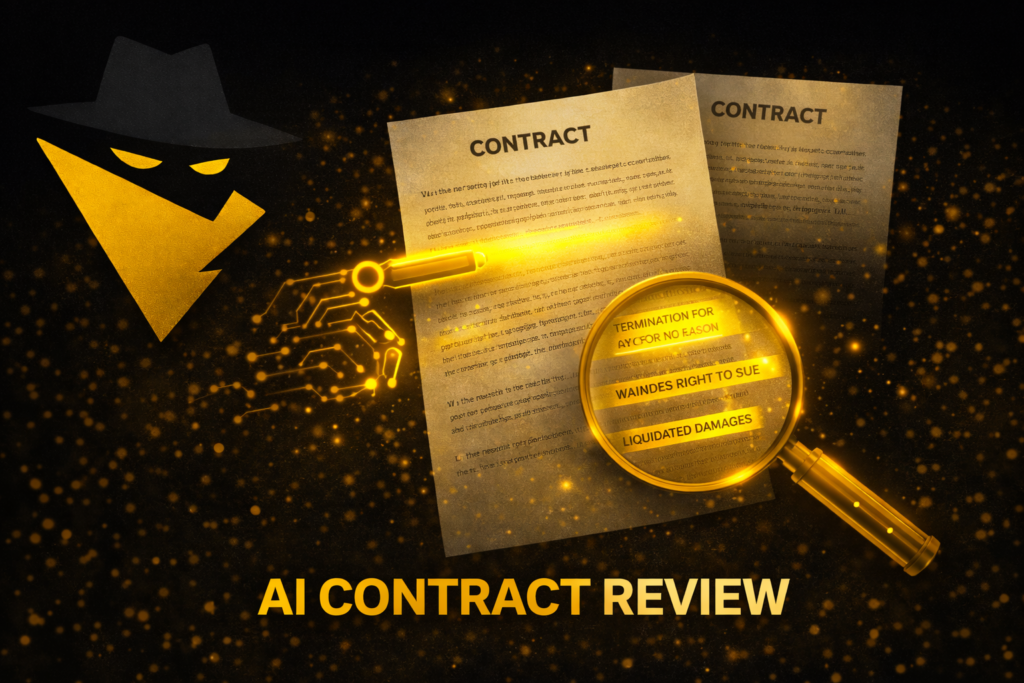
AI contract review tools like Kira and Luminance now analyze thousands of agreements in hours—not weeks. Here is how law firms use them for due diligence in 2026.
Key Takeaways
- Kira, Luminance, and similar platforms extract clauses, flag risks, and compare contract sets at scale.
- AI contract review cuts M&A and commercial diligence time while improving consistency across reviewers.
- Firms pairing AI review with attorney oversight win speed without sacrificing judgment on high-stakes deals.
- Platform choice depends on deal volume, document types, and integration with your DMS or practice tools.
Quick Answer
What is AI contract review for law firms? AI contract review uses machine learning to read, classify, and flag clauses in agreements—so attorneys focus on judgment calls instead of line-by-line manual review. Leading platforms include Kira Systems and Luminance.
The Contract Review Revolution Is Already Here
Contract review has always been one of the most labor-intensive tasks in legal practice. Whether it’s a single commercial agreement that needs clause-by-clause analysis or a due diligence project involving thousands of contracts in an M&A transaction, the traditional approach — armies of associates and contract attorneys reading every page line by line — is being fundamentally disrupted by AI platforms that can process contracts faster, more consistently, and increasingly more accurately than human reviewers.
In 2026, the leading AI contract review platforms — Kira Systems, Luminance, and newer entrants like SpotDraft and Ironclad’s AI features — aren’t experimental tools being piloted in innovation labs. They’re production systems handling real transactions with real stakes, and the firms using them are winning business on the strength of the speed and cost advantages they deliver.
How AI Contract Review Works
The Technology Under the Hood
Modern AI contract review platforms use a combination of natural language processing, machine learning trained on millions of legal documents, and increasingly sophisticated reasoning capabilities to extract, analyze, and flag provisions across contract portfolios. The technology has moved well beyond simple keyword matching — these systems understand the legal meaning of contract provisions, not just the words used to express them.
When you upload a contract to a platform like Kira or Luminance, the AI first identifies the document type (asset purchase agreement, lease, employment agreement, NDA, etc.) and applies the appropriate analytical framework. It then extracts key provisions — representations and warranties, indemnification terms, limitation of liability, termination rights, change of control provisions, assignment restrictions, and dozens more — and presents them in a structured format that allows rapid review and comparison.
What makes this transformative rather than merely useful is the AI’s ability to flag deviations from market standards or from the reviewing firm’s preferred positions. A change of control provision that uses a 50% threshold instead of the market-standard “majority of voting power” language gets flagged automatically. An indemnification cap that’s lower than comparable transactions gets highlighted. An unusual definition of “material adverse effect” gets called out for attorney attention.
Training Custom Models on Your Firm’s Standards
The most powerful feature of enterprise AI contract review platforms is their ability to learn from your firm’s specific preferences and standards. By analyzing your firm’s historical contract negotiations — the clauses you always push back on, the language your partners prefer, the deal terms your clients consider standard — the AI builds a custom model that reviews contracts through your firm’s specific lens.
This custom training means that when the AI reviews a new contract, it doesn’t just compare against generic market standards — it compares against your firm’s standards. A provision that might be acceptable in the market generally but that your firm’s real estate practice group consistently negotiates to a higher standard gets flagged specifically because it deviates from how your firm typically handles that issue.
Platform Deep Dive: The Market Leaders
Kira Systems
Kira has been in the AI contract analysis space longer than most competitors, and its maturity shows in the depth of its extraction capabilities. The platform ships with over 1,000 pre-built extraction models covering the most common contract provisions across multiple document types, and it allows firms to build custom models for specialized or unusual provisions.
Kira’s strength is in high-volume due diligence scenarios. When a firm needs to review 5,000 contracts in a data room for an M&A transaction, Kira can process the entire set in hours, extracting and organizing key provisions into a structured database that analysts can query rather than read. The time savings in a typical mid-market M&A transaction are measured in weeks, not days, and the consistency of extraction far exceeds what human reviewers achieve when processing documents at scale.
The platform’s limitation is its relative complexity for ad hoc contract review. Kira is built for industrial-scale review processes, and the setup time for a single contract review can make it less efficient than manual review for one-off tasks. Firms that primarily need AI for individual contract negotiation rather than portfolio-scale review may find other platforms more suitable.
Luminance
Luminance distinguishes itself through its unsupervised learning approach — the platform can analyze a set of contracts and identify patterns, anomalies, and outliers without being told what to look for. This makes Luminance particularly valuable in situations where the reviewing attorney doesn’t know exactly what they’re looking for, which is surprisingly common in due diligence contexts.
In a typical Luminance workflow, the attorney uploads a portfolio of contracts and the platform immediately generates a visual map showing clusters of similar documents, highlighting outliers and anomalies. A contract that uses unusual governing law provisions stands out from the cluster. An agreement with atypical liability caps gets flagged. A document with missing standard provisions is identified. This pattern-recognition capability surfaces issues that traditional review — which relies on the reviewer knowing what to look for — routinely misses.
Luminance also excels in cross-border transactions where contracts are in multiple languages. The platform’s multilingual capabilities allow it to extract and compare provisions across English, French, German, Spanish, and numerous other languages without requiring translation, which is a significant advantage for international M&A work.
The New Wave: SpotDraft, Ironclad, and Hybrid Platforms
The newest generation of AI contract platforms — SpotDraft, Ironclad’s AI features, and similar tools — takes a different approach by integrating AI review into the contract lifecycle management (CLM) workflow. Rather than treating AI review as a standalone analysis step, these platforms embed AI throughout the contract process from drafting through execution to ongoing obligation management.
SpotDraft, for example, offers AI-powered first-draft generation, real-time redlining suggestions as the attorney reviews a counterparty draft, and automated extraction of key terms into a searchable contract database upon execution. This integrated approach means the AI isn’t just helping with one-time review — it’s continuously monitoring the firm’s entire contract portfolio and alerting to upcoming renewal dates, expiring terms, and triggered obligations.
Use Cases: Where AI Contract Review Delivers Maximum Impact
M&A Due Diligence
M&A due diligence remains the killer application for AI contract review. In a typical acquisition, the buyer’s counsel needs to review hundreds or thousands of contracts to identify risks, liabilities, and value-affecting provisions. The traditional approach requires teams of associates and contract attorneys working around the clock during compressed due diligence periods, with all the quality risks that fatigue and time pressure create.
AI transforms this process in three ways. First, it dramatically compresses the initial review timeline — what took weeks now takes days. Second, it improves consistency — every contract is reviewed against the same criteria with the same level of attention, eliminating the variability inherent in human review teams. Third, it enhances issue detection — the AI catches provisions that fatigued human reviewers miss, particularly in the late stages of large review projects.
Firms using AI for M&A due diligence report time savings of 60-80% on the contract review portion of the due diligence process. For a mid-market deal where traditional due diligence contract review might cost $200,000-$400,000 in legal fees, AI-assisted review can reduce that to $80,000-$150,000 — a savings that often determines which firm wins the engagement.
Lease Portfolio Review
Commercial real estate practices are finding AI contract review transformative for lease portfolio analysis. When a client with 500 retail locations needs to understand their renewal options, assignment restrictions, and co-tenancy provisions across their entire lease portfolio, AI can extract and organize this information in a fraction of the time manual review requires.
The AI’s ability to normalize disparate lease provisions into a consistent format is particularly valuable here. Different landlords use different language for similar provisions, and AI platforms can identify functionally equivalent terms across hundreds of leases, creating a unified view of the portfolio’s rights and obligations.
Regulatory Compliance Review
When regulations change — new privacy requirements, updated financial regulations, revised employment laws — firms need to assess the impact across their clients’ existing contract portfolios. AI makes it possible to scan thousands of existing contracts against new regulatory requirements and identify which contracts need amendment, which are already compliant, and which present the highest compliance risk.
Implementation Best Practices
Start with a Defined Use Case
The firms that struggle with AI contract review adoption are almost always the ones that try to boil the ocean. Rather than implementing AI across every contract type and practice area simultaneously, start with a single, high-volume use case where the ROI is clear and measurable. M&A due diligence, lease review, and NDA triage are common starting points because they combine high volume with relatively standardized document types.
Invest in Training
AI contract review platforms are sophisticated tools that require training to use effectively. Budget for comprehensive training not just during initial deployment but on an ongoing basis as platforms release new features. Designate power users in each practice group who can serve as first-line support and training resources for their colleagues.
Measure and Communicate Results
Track time savings, cost reductions, and quality improvements from AI contract review and communicate these results across the firm. Nothing drives adoption faster than concrete data showing that Practice Group A saved 200 hours and $75,000 on their last due diligence project using AI tools. These results also make the case for additional investment in AI capabilities.
The Future of Contract Review
The AI contract review market is evolving rapidly, and the next wave of capabilities will further transform how lawyers interact with contracts. Predictive analytics — the ability to assess how specific contract terms are likely to play out based on historical data — is already emerging in some platforms. Automated negotiation assistance — AI that not only identifies issues but drafts proposed alternative language — is moving from experimental to production-ready. And integration with broader legal operations platforms is creating workflows where contract review is seamlessly connected to compliance monitoring, obligation management, and strategic reporting.
For law firms, the question is no longer whether to adopt AI contract review but how quickly they can implement it and how effectively they can integrate it into their practice. The competitive advantages — in speed, cost, and quality — are too significant to ignore, and the firms that move fastest will capture the most value.
At Lawless Clicks, we help forward-thinking law firms market the capabilities that set them apart. If your firm is leveraging AI to deliver faster, more thorough contract review, let us help you communicate that advantage to the clients who value it most.
Frequently Asked Questions
How is AI transforming the legal industry?
AI is transforming law firms through automated document review, predictive case analytics, smart client intake systems, AI-powered legal research, automated billing, and intelligent marketing that identifies promising leads.
What are the risks of using AI in a law firm?
Key risks include potential ethical violations from unsupervised AI outputs, data privacy concerns with client information, over-reliance on AI for legal analysis, and the need to verify AI-generated content for accuracy.
How can small law firms afford AI tools?
Many AI tools for law firms offer tiered pricing starting at $50-200/month. Start with high-impact tools like AI chatbots for intake, automated email sequences, and content assistance. Scale up as ROI is demonstrated.
Looking for proven Law Firm SEO strategies that deliver real results? Lawless Clicks is a Law Firm SEO agency built for attorneys who want more clients from Google. Visit our homepage to learn how we can help your firm grow.


